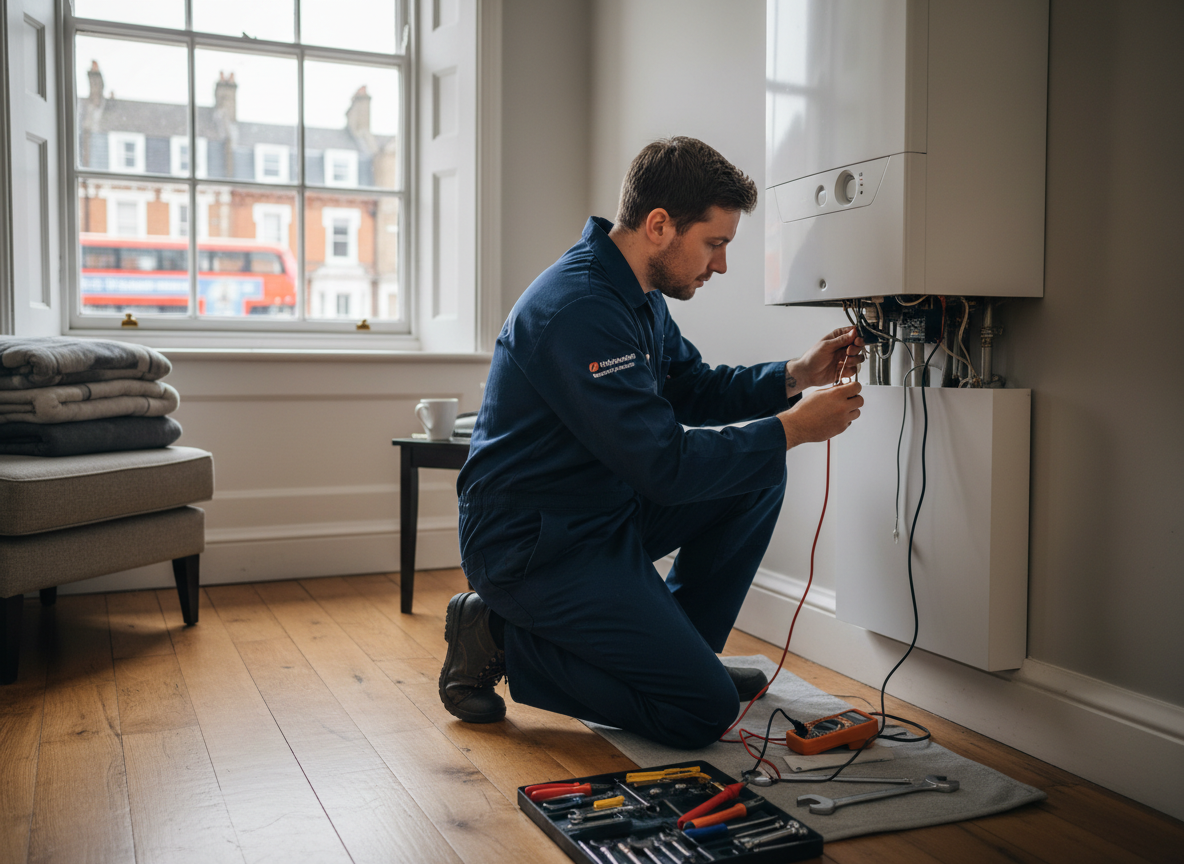
London's older housing stock, especially Victorian terraces in areas like Hackney and post-war flats around the Isle of Dogs, often features outdated radial circuits that struggle with modern electric panel heaters. Damp winters accelerate corrosion on elements and thermostats, leading to uneven heat or complete failure. Our technicians carry replacement parts suited to common makes found in these properties and check for overloaded consumer units before any repair.
Repairs frequently involve tracing intermittent faults caused by rodent damage in loft spaces or water ingress through flat roofs common in Canary Wharf developments. We test insulation resistance and earth continuity to meet current IET Wiring Regulations, avoiding shortcuts that leave systems unsafe in high-rise blocks. In terraced homes, we also verify that repairs do not affect neighbouring properties sharing party-wall cabling.
Edge cases include storage heaters installed in the 1980s that require specific off-peak tariff wiring, still present in many Greater London council conversions. Attempting DIY element swaps on these units risks damaging the thermal bricks or exceeding the 13A limit on standard sockets. We always isolate the circuit at the consumer unit and label any new connections clearly for future maintenance.
Technician insight
In London the thing that catches most people out with electric heating repair services is the state of the original wiring in 1970s and 1980s blocks around Canary Wharf and the Isle of Dogs. Shared consumer units and aluminium tails hidden behind dry lining often turn a simple element swap into a full circuit upgrade once we open the wall.
Storage heater failure in Isle of Dogs flat
A resident in a 1980s Docklands conversion reported no heat from two storage heaters during a cold snap. We found failed charge control relays and corroded off-peak wiring hidden in the false ceiling. After replacing the relays and re-terminating the damaged tails we restored full function and confirmed the circuit remained within load limits for the shared supply.
How it works
- 1
Initial Assessment
We arrive within the agreed window, isolate the faulty heater and run full electrical tests including insulation resistance and earth loop impedance.
- 2
Fault Diagnosis
Using thermal imaging and multimeter readings we pinpoint whether the issue lies in the element, thermostat, wiring or control board.
- 3
Repair or Replacement
We fit manufacturer-approved parts, re-terminate connections and restore power only after confirming safe readings.
- 4
Final Safety Check
A full system test follows, with written confirmation of compliance and advice on any further work needed in the property.
Pricing
Upfront quotes given on site after diagnosis; final cost depends on parts required and access conditions in the property.